
A deep dive into the convergence of generative AI and edge computing.
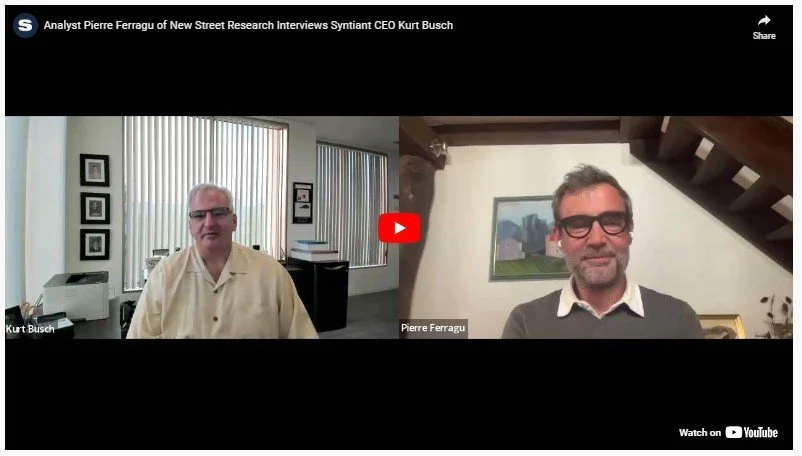
Syntiant CEO Kurt Busch talks with Analyst Pierre Ferragu of New Street Research about the company’s recent acquisition of Knowles’ MEMS mic business.

Syntiant CEO Kurt Busch addresses three fundamental challenges for deploying edge AI.

By Mallik Moturi This blog is a follow-up to our previous article, “Why Edge AI for Wearables.” Building on the concepts discussed there, this article explores how edge AI and generative AI can make wearables not just smart, but truly sentient, highly intelligent personal devices that can sense, hear, see

In the first part of this series, we explored the challenges posed by the current approach to edge AI, such as scalability issues, escalating network and cloud costs, and the limitations of legacy processors. As the demand for smarter, faster, and more secure AI applications grows, it is

EVs are equipped with hundreds of sensors and controllers to measure and process tons of data. As the techniques to make data-driven decisions evolve, the e-mobility industry has taken advantage of Big Data and AI to operate, monitor, and optimize a crucial piece of the EV powertrain: the

In this blog post, we will show how modelers can leverage the true power and throughput performance of edge neural accelerators to get the best task performance.

By Rouzbeh Shirvani and Sean McGregor Academic machine learning requires extensive toolsets for model training and evaluation, but the vast majority of academic work is more grounded in model capacity than looking at the energy cost of deploying those models. This puts modelers at a disadvantage for developing consumer device

In this latest episode of Syntiant’s “Voice Of Innovation” interview series, AI and Robotics Reporter Rachel Gordon talks with Women in Voice’s CEO and founder Dr. Joan Palmiter Bajorek about the inevitability of AI-based ecosystems. The “Voice of Innovation” video series was developed through a partnership with Syntiant and Wevolver
Syntiant recently submitted its NDP120 into the MLCommons’ MLPerf Tiny category for keyword spotting, which is intended for the lowest power devices and smallest form factors, such as deeply embedded, intelligent sensing and IoT applications. “Syntiant’s architecture yielded the industry’s lowest-power solution for running edge-based AI applications,” said Jeremy Holleman,